Friday, April 21, 2017

How to Change a Tire Safely & Quickly


A flat tire never happens when it's convenient. Even if you already know how, here's a refresher with some helpful tips to make it less of an ordeal.


A flat tire never happens when it's convenient. You'll be all dressed up and on the way to an important event when you run over that errant nail. Changing a tire by the side of the road was a regular event for motorists in the first half of the last century, but with modern tires you may never have had the pleasure of this adventurous experience. Even if you already know how, here's a refresher with some helpful tips to make it less of an ordeal.

STEP 1: BE PREPARED


Planning ahead will save a lot of frustration. It's not a bad idea to keep an emergency kit in your trunk and disposable, but sturdy Tyvek overalls will help keep your dry cleaning bills down. Throw in some mechanics gloves, a good waterproof flashlight, hand cleaner, and paper towels. Believe it or not, all that, plus wheels chocks, flares, tire gauge and tire sealant all fit into this shallow Rubbermaid bin. The lid can double as something to kneel on. Since flat tires happen year round, you can even fit in a collapsible snow shovel.

STEP 2: LOCATION, LOCATION, LOCATION


You want to choose your tire changing place very carefully. Once on the shoulder, slowly driving to the next exit ramp may give you enough space needed to stay away from the main flow of traffic.


Friday, April 14, 2017

Essentials for Any Off Road Adventure

Image result for off roading.

  • Full gas tank
  • Tow rope (be sure it is rated heavy enough for your vehicle)
  • Spare tire and everything needed to make a change in the field
  • Portable air compressor
  • Navigational aids
  • First aid kit
  • Mobile phone

Friday, April 7, 2017

Our Special Promotions


Sign up now to receive Country Truck Service Center emails with 
exclusive promotions and offers!


http://countrytruckservice.com/

Friday, March 31, 2017

A Brief Lesson in Off Road Vocabulary


Image result for truck off roading

4×4 High: All-purpose four wheel drive mode used in most cases. As opposed to 2 wheel drive, all four wheels are engaged and powered by the powertrain. “High” refers to the gear ratio, meaning that the gear ratio is unchanged from the ratio used in 2 wheel drive.
4×4 Low: Four wheel drive mode where a lower gear ratio is engaged, thus delivering higher torque to the wheels and lowering maximum speed. Useful in slower off road situations, rock crawling, and for getting unstuck when things go south.
Locking Differential: Also known as “diff lock,” this refers to the speed at which the wheels turn. In most standard 4×4 modes, the wheels spin at different speeds to compensate for loose or uneven terrain. When the differential is locked, wheels all move at the same speed. A tool used in advanced off-roading and for getting unstuck.
Approach Angle: The maximum incline angle that a vehicle can climb or descend without any part of the body or suspension making contact with the driving surface.
Wheelbase: Distance from the center of a truck’s front wheel to the center of the rear wheel on the same side of the vehicle.
Wheel Travel: The maximum distance a wheel can move up and down. The greater the travel, the more capable the suspension system and the better on and off road traction.
Rock Massage: What you get when you attempt rock crawling without taking the necessary precautions and being properly qualified.

Friday, March 24, 2017

Country Truck Service Center


Welcome to Country Truck Service Center, your experienced local auto service specialists! We specialize in the service and maintenance of diesel pickup and utility trucks. However, we can service all makes and models, including foreign autos. Our experienced Service Team is lead by ASE Certified Master Technician, David Robinson.
At the Country Truck Service Center, we value excellence and continuous development. Our technicians stay up to date with the latest industry knowledge and trends. We also believe in investing in the latest technology. We are in the process of building a brand new service department next door to our current location. It is slated to open in Summer 2017!
We are located at 13030 County Road 20, Fort Lupton, Colorado and are available by phone at 303-990-7050. Please contact us if you would like a quote for service or need additional information.

Friday, March 10, 2017

Top Ten Car Care Tips

Image result for ford truck care

What you can do yourself to keep your car on the road
If everything on TV were true, then keeping a vehicle running great, looking good, and lasting a long time would be the easiest thing ever. Advertising will tell us over and over that all we really need to do to keep that car or truck running forever and looking brand new for years is to pour some bottles of miracle liquid into the crankcase, sprinkle magic dust on the paint, or spray some sort of ionized wonder water on the interior. Unfortunately this is not the case.
Following the old adage that "if it sounds too good to be true it probably is" comes the news that regular, proper care and maintenance are what really keep vehicles going into the high six-figure mileage ranges. Miracle cures, magic fairy dust, mystery polymers and the like are all fine and good for infomercials, but most likely won't do much good for your vehicle.
Regularly scheduled maintenance and lubrication using the manufacturers recommended type and formulation of oil, grease and liquids is what will do the trick. Replacing normal wear-and-tear parts such as timing belts before they break is also a good path to follow on the road to long vehicle life. Taking good care of your vehicle can make the difference between being the proud owner of a good looking, long lasting, reliable machine, and saying goodbye to a rusty, faded-paint jalopy that fell apart or broke down long before it was designed to.
The Maintenance Difference
We all know somebody with an older, high-mileage vehicle that just keeps on running year after year---that crazy uncle in the high-mileage ride that keeps on going strong. "What's Uncle Fred's secret?" you may wonder, scratching your head with one hand while holding a repair bill in the other? At its core, Uncle Fred's 500,000-mile 1972 Datsun 610 is no different a vehicle than a two-year-old hulk that barely cleared 65,000 miles before it got hooked up to the wrecker truck, never to be seen again. While the short-lived heap has since been crushed, melted down, and built into another car, Uncle Fred keeps on trucking.
The secret is that there is no real secret to getting a vehicle to last a long time. The difference is maintenance. Regular fluid checks and an almost pious dedication to scheduled lubrication will keep the powertrain going strong. What kind of oil, brake fluid, and grease used is just as important as when it is changed. The best oil in the world will do your engine no good if you never change it. Cleaning and protecting the finishes of the vehicle inside and out will keep things looking good. Paint, plastic, leather, and fabric need help to survive the constant assault of sun and elements. Utilize both of these plans together and you, like Uncle Fred, will enjoy happy motoring for a good, long time. Follow the accompanying 10 handy tips for keeping your vehicle in top shape.

Friday, March 3, 2017

Should I Worry About How Hot My Engine Is Running?

HotEngine_Jim_DeLillo-iStock-Thinkstock.jpg 


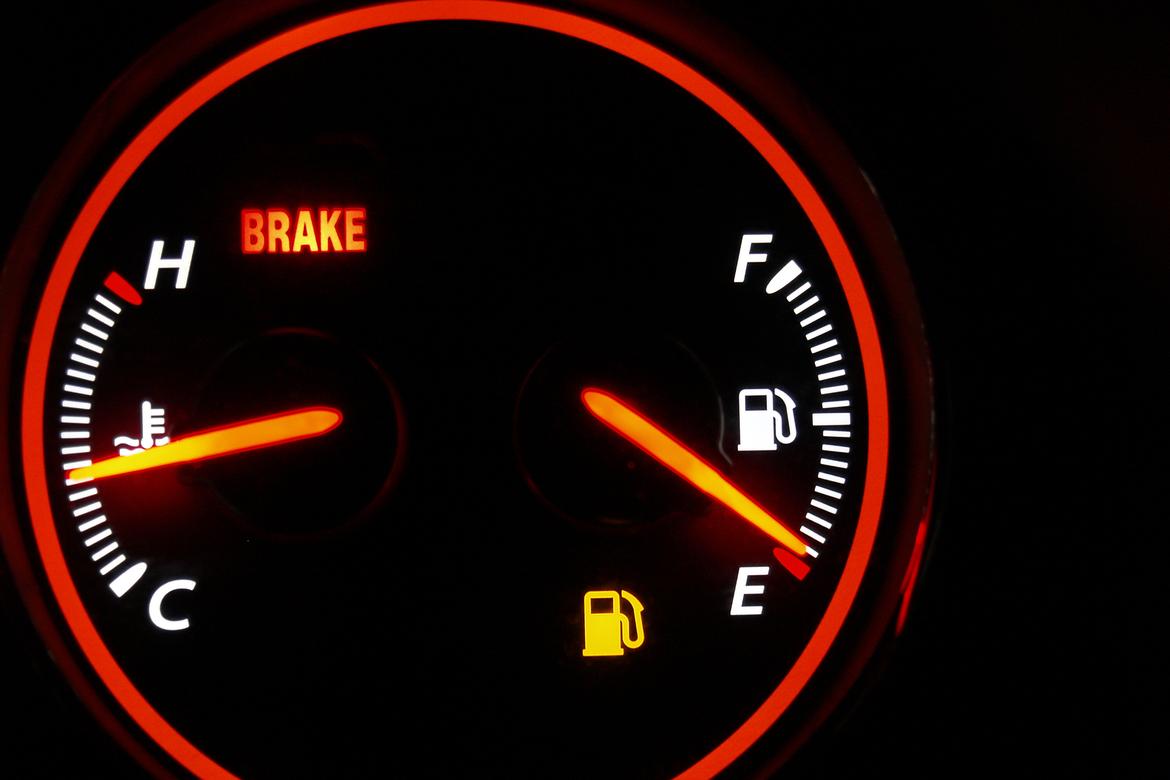
You should be very concerned, because an overheated engine can be far more than an inconvenience. In extreme cases, driving an overheated engine even a short distance can destroy the cylinder head, engine block or internal parts.
Fortunately, most modern vehicles have a gauge that displays a constant temperature reading of the coolant circulating inside the engine, giving the driver an early warning about the cooling system.
The normal operating temperature for most engines is in a range of 195 to 220 degrees Fahrenheit, though most dashboard temperature gauges don't show an exact temperature. Instead, there are typically markings for cold and hot on the edges of the gauge and a normal range in the middle. In most vehicles, the temperature needle will be at or near the center when the engine is at normal operating temperature, which usually takes at least a minute or two to reach after starting a cold engine.